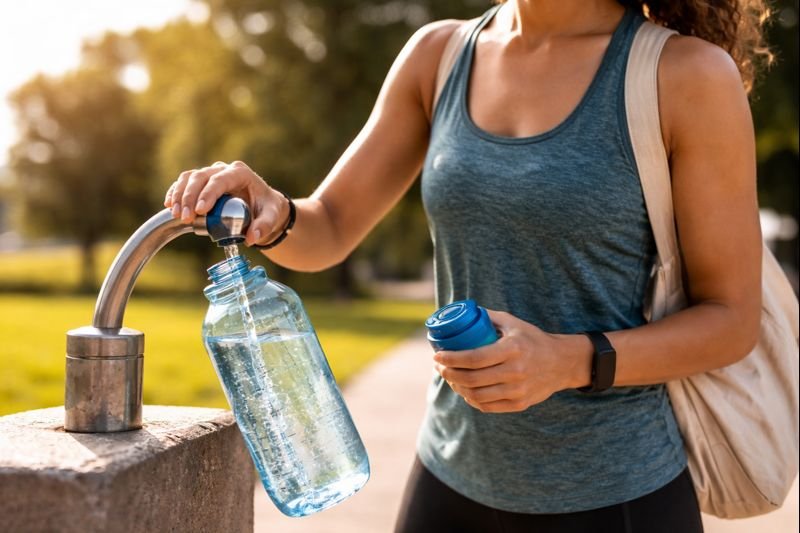
For years, I carried a reusable bottle everywhere because I was convinced eight glasses a day was the bare minimum for being “healthy.” On busy workdays, I’d force myself to sip water late at night just to hit a number, even when I wasn’t thirsty. It felt productive, almost disciplined. But it also felt oddly disconnected from how my body actually worked.
That disconnect is exactly why so many adults today are rethinking hydration. The idea that everyone should drink the same amount of water every day sounds simple, but human biology rarely is. When you look at modern science and real-life routines in the United States, it becomes clear that hydration is personal, flexible, and far more intuitive than a fixed rule suggests.
Why The Eight Glasses Rule Became Popular
The “eight glasses a day” rule stuck because it was easy to remember. In a country where health advice often needs to be quick and actionable, a simple number felt helpful. Over time, it turned into a wellness badge of honour rather than a science-based guideline.
The problem is that this rule ignores how different daily lives really are. A construction worker in Texas, an office employee in Seattle, and a retired adult in Florida do not have the same hydration needs. Treating them as if they do can lead to confusion, unnecessary worry, or even overhydration in some cases.
What Science Actually Says About Daily Water Needs

When people ask how much water adults should drink per day for health, modern science doesn’t give a single number. Instead, it offers ranges based on population averages and total fluid intake, not just plain water.
According to the U.S. National Academies of Sciences, Engineering, and Medicine, daily fluid intake should include everything you drink and the water you get from food:
- Adult men: about 3.7 liters per day, which equals roughly 15.5 cups
- Adult women: about 2.7 liters per day, or around 11.5 cups
- Pregnant or breastfeeding women: needs rise to approximately 3.0–3.8 liters per day
These numbers reflect total fluids, not a requirement to drink that much water alone. This distinction is where many people get tripped up.
Why Total Fluid Intake Matters More Than Water Alone
One of the most misunderstood aspects of hydration is the role of food and other beverages. Roughly 20 percent of daily fluid intake in the US comes from food. Fruits and vegetables like watermelon, cucumbers, oranges, and spinach quietly contribute more than people realize.
Beverages also count. Coffee, tea, milk, and even sparkling water all support hydration. While caffeine does have a mild diuretic effect, research shows it does not cause a net loss of fluids when consumed in normal amounts. This matters for Americans who rely on morning coffee or afternoon tea as part of their routine.
Hydration Is Highly Individual By Design

Your body’s water needs shift constantly. Weight, movement, environment, and health status all play a role. This is why many health professionals prefer personalized estimates over universal rules.
A commonly cited alternative approach is weight-based hydration. Drinking about 35 milliliters of water per kilogram of body weight provides a starting point. For a 70-kilogram adult, that comes out to roughly 2.45 liters per day, before accounting for exercise or climate.
Living conditions matter too. Adults who work outdoors, exercise regularly, or live in hot and humid regions of the United States often need an extra 500 to 1,000 milliliters of fluids daily. Hydration isn’t static; it adjusts as life does.
How To Tell If You’re Drinking Enough Without Counting Glasses
Instead of obsessing over measurements, many health experts encourage paying attention to how the body communicates its needs. These signals tend to be more accurate than rigid targets.
- Thirst is not a failure signal; it’s a normal, well-regulated mechanism designed to protect fluid balance.
- Urine color offers a reliable clue. Pale yellow or straw-colored urine usually indicates adequate hydration. Dark yellow suggests you need more fluids, while consistently clear urine may mean you’re overdoing it.
- Urination frequency also matters. Most healthy adults urinate every three to four hours during the day. Large gaps or very frequent clear urine can both signal an imbalance.
This approach feels less mechanical and more human, which is often easier to sustain long-term.
When Hydration Needs Change With Age And Health

As adults age, the sensation of thirst can become less pronounced. Certain medications, including diuretics and blood pressure drugs, also influence fluid balance. In the US, this is especially relevant for older adults managing chronic conditions.
In these cases, gentle consistency matters more than volume. Small, regular sips throughout the day often work better than large amounts consumed all at once. Paying attention to urine color and energy levels becomes even more important when thirst cues are muted.
Hydration In Everyday American Life
Daily routines shape hydration habits more than guidelines ever could. Long commutes, air-conditioned offices, intense gym sessions, and seasonal heat waves all influence how much fluid the body needs.
What tends to work best is building hydration into existing habits. Drinking a glass of water with meals, keeping fluids nearby during work hours, and increasing intake during physical activity can cover most needs without conscious tracking. Flexibility beats perfection.
Frequently Asked Questions (FAQs)
1. Is Drinking Eight Glasses Of Water A Day Bad For You?
It isn’t harmful for most people, but it isn’t necessary either. For some adults, eight glasses may be too little, while for others it may be more than needed.
2. Does Coffee Or Tea Count Toward Daily Hydration?
Yes. Coffee and tea contribute to total fluid intake. In moderate amounts, caffeine does not cancel out hydration benefits.
3. How Much Water Should Adults Drink Per Day For Health When Exercising?
Exercise increases fluid needs. Most adults benefit from adding 500-1,000 milliliters of fluids on workout days, depending on intensity and sweat loss.
4. Can You Drink Too Much Water?
Yes. Excessive water intake without electrolyte balance can lead to overhydration, which dilutes sodium levels. This is rare but possible, especially during endurance activities.
Final Thoughts
Hydration works best when it fits your life rather than fighting it. The real answer to how much water adults drink per day for health lies somewhere between awareness and adaptability. Science gives us ranges, not commandments, because the body thrives on balance, not rigid rules.
Listening to physical cues, adjusting for activity and climate, and letting food and beverages do their part creates a sustainable rhythm that supports long-term health. When hydration feels natural instead of forced, it becomes part of daily well-being rather than another number to chase.