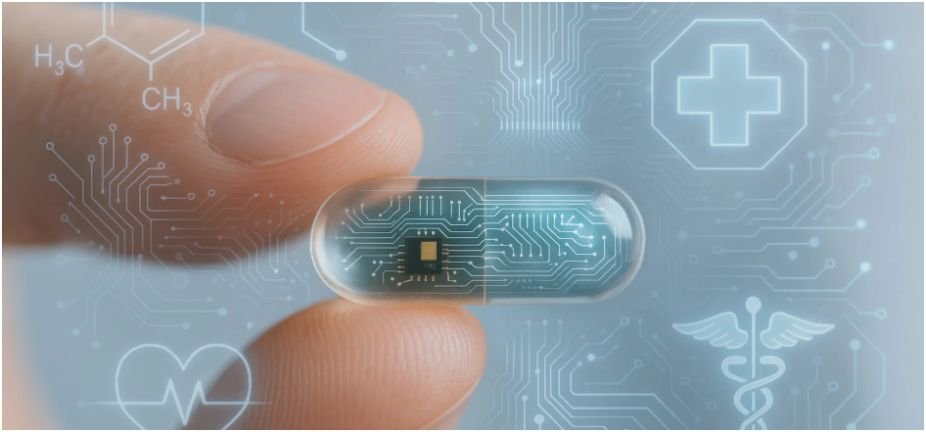
A few years ago, early disease detection in the United States mostly depended on timing, symptoms, and a bit of clinical intuition. Many conditions were caught only after patients felt something was wrong. Today, that pattern is changing fast.
Hospitals, clinics, and research centers across the US are leaning on machine learning to spot risks earlier, sometimes before patients feel anything at all. What’s striking is not just the technology itself, but how it’s quietly reshaping medical decisions.
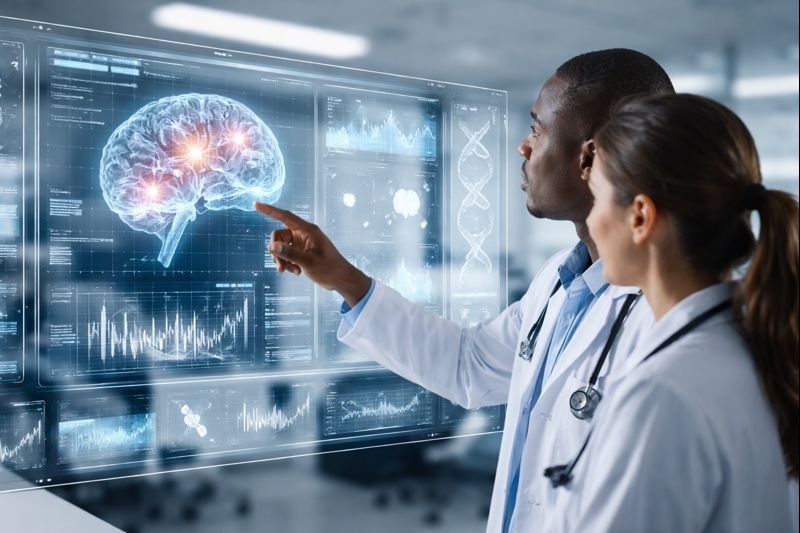
Doctors are no longer reacting only to visible symptoms. They are increasingly supported by systems that flag subtle warning signs, predict disease progression, and help decide when to intervene sooner rather than later.
How Medical Decision-Making Is Shifting From Reactive To Proactive Care
For decades, healthcare followed a reactive model. A patient reported symptoms, tests were ordered, and treatment followed. The role of machine learning in early disease detection changes that sequence. Instead of waiting, ML systems analyze patterns across electronic health records, imaging data, lab results, and even wearable device data to anticipate risk.
In US hospitals, this shift is especially visible in large health systems that manage millions of patient records. Machine learning models can recognize combinations of data points that may not look alarming on their own but become meaningful when viewed together. That insight allows clinicians to act earlier, often when treatment options are simpler, and outcomes are better.
How Machine Learning Influences Clinical Decisions In Real Time

Medical decisions are increasingly shaped by real-time insights rather than retrospective analysis. Machine learning models continuously evaluate incoming data and surface signals clinicians might otherwise miss.
Here’s how that plays out in day-to-day healthcare settings:
- ML-based early warning systems analyze patient vitals and history to predict events like sepsis, hospital readmission, or acute kidney injury up to two days in advance.
- Imaging algorithms, especially convolutional neural networks, review X-rays, MRIs, and CT scans to detect abnormalities that can signal early-stage cancer or cardiovascular disease.
- Clinical decision support systems automate routine screenings, allowing physicians to focus attention on patients who need deeper evaluation.
These systems do not replace clinicians. Instead, they act as a second set of eyes one that never gets tired and can process far more data than any human could in a short time.
Why Diagnostic Accuracy Improves With Machine Learning
Diagnostic errors remain a serious issue in the US healthcare system, contributing to avoidable complications and, in some cases, preventable deaths. The role of machine learning in early disease detection directly addresses this problem by reducing uncertainty in diagnosis.
ML models excel at pattern recognition. When applied to medical imaging, for example, they can identify minute changes in tissue that are difficult to detect visually. In fields like radiology and pathology, this has led to earlier identification of cancers, neurological disorders, and heart disease.
More importantly, machine learning introduces consistency. Human judgment can vary based on fatigue, workload, or experience. Algorithms apply the same standards every time, helping clinicians confirm findings and reduce the risk of oversight.
The Move Toward Personalized Medical Decisions

One of the most meaningful shifts driven by machine learning is the move away from one-size-fits-all treatment plans. In US healthcare, personalization has long been a goal, but it was difficult to achieve at scale.
Machine learning changes that by analyzing genetic information, lifestyle data, and prior treatment responses together. This allows clinicians to make more informed decisions about therapies, dosages, and follow-up care. In oncology, for example, ML-supported models help oncologists choose treatment plans that balance effectiveness with quality of life, reducing unnecessary side effects.
These personalized insights influence not just what treatment is chosen, but when it should begin. Early intervention, guided by predictive models, often leads to better long-term outcomes.
Impact On Patient Outcomes Across The US
The practical benefits of early detection show up clearly in patient outcomes. Identifying diseases early dramatically improves survival rates and allows for less invasive treatment.
In the United States, early detection of conditions like melanoma can result in five-year survival rates close to 99 percent. When detection happens later, those numbers drop sharply. Machine learning supports clinicians by flagging early risk indicators, increasing the likelihood that patients receive care at the right moment.
There is also a cost-related impact. Preventing advanced disease reduces hospital admissions, shortens stays, and lowers the need for complex procedures. Over time, this helps control healthcare spending while improving patient experiences.
Challenges That Still Shape Medical Decisions

Despite its promise, machine learning is not without challenges. Medical decisions carry serious consequences, and clinicians need to trust the tools they use.
One major concern is explainability. Many deep learning models operate as “black boxes,” offering predictions without clear reasoning. In clinical environments, doctors need to understand why a system is recommending a specific course of action.
Bias is another issue. If training data does not reflect the diversity of the US population, algorithms may perform better for some groups than others. Addressing this requires careful data selection and ongoing model evaluation.
Data privacy also plays a critical role. Machine learning systems rely on large volumes of sensitive health information, making compliance with regulations like HIPAA essential to maintain patient trust.
Where Machine Learning Is Already Making A Difference
The role of machine learning in early disease detection is most visible in a few key medical areas across the US healthcare system.
In oncology, ML helps identify tiny tumors in mammograms and lung scans, improving early cancer detection rates. In cardiology, algorithms analyze heart rhythm data from wearable devices to detect atrial fibrillation and predict future cardiac events. In neurology, subtle structural changes in brain imaging are used to identify early signs of Alzheimer’s and Parkinson’s disease before symptoms become obvious.
These applications influence medical decisions every day, often guiding follow-up testing, referrals, and preventive care plans.
Frequently Asked Questions (FAQs)
1. How Accurate Is Machine Learning In Early Disease Detection?
Accuracy depends on the condition and data quality, but many imaging-based ML systems achieve accuracy rates above 90 percent, especially when used alongside clinical expertise.
2. Does Machine Learning Replace Doctors In Medical Decision-Making?
No. Machine learning supports clinicians by providing insights and risk assessments, but final medical decisions remain with healthcare professionals.
3. Is Patient Data Safe When Using Machine Learning Systems?
In the US, healthcare organizations must follow strict HIPAA regulations to protect patient data used in machine learning models.
4. Which Diseases Benefit Most From Early Detection Using Machine Learning?
Cancer, cardiovascular disease, neurological disorders, and metabolic conditions show the strongest benefits from ML-driven early detection.
Final Thoughts
The shift toward proactive healthcare is no longer theoretical. The role of machine learning in early disease detection is actively reshaping how medical decisions are made across the United States. By identifying risk earlier, improving diagnostic accuracy, and supporting personalized care, machine learning helps clinicians intervene when it matters most.
As these systems mature, the focus will move beyond adoption to trust, transparency, and equitable performance, ensuring that early detection benefits every patient, not just a few.