

You book a massage expecting to feel looser for a day or two. That’s the deal. Tight muscle in, relaxed muscle out, and by Thursday you’re right back where you started.
Structural bodywork is not that. It’s not a deeper, harder version of the same thing. It’s a different tool aimed at a different target, and confusing the two is why a lot of people try one session, feel underwhelmed, and never go back.
Here’s the actual difference, what the research says about it, and how to tell which one you need.
You’ve Probably Had a Massage. You Probably Haven’t Had This.
Ask ten people what a “deep tissue massage” does and you’ll get some version of “works out the knots.” Ask what “structural integration” or “clinical bodywork” does and most people have no idea, even though both terms show up constantly in wellness marketing.
The European Rolfing Association puts it plainly: massage recognizes the interconnectedness of the body but tends to focus more locally on tense and painful areas and tender spots, centering on immediate relief, relaxation, and stress reduction.
Structural work starts from a different premise entirely: that the pain in your shoulder might not actually be a shoulder problem.
The Real Difference Isn’t Pressure, It’s the Target
Massage Works on Muscle. Structural Work Targets Fascia.
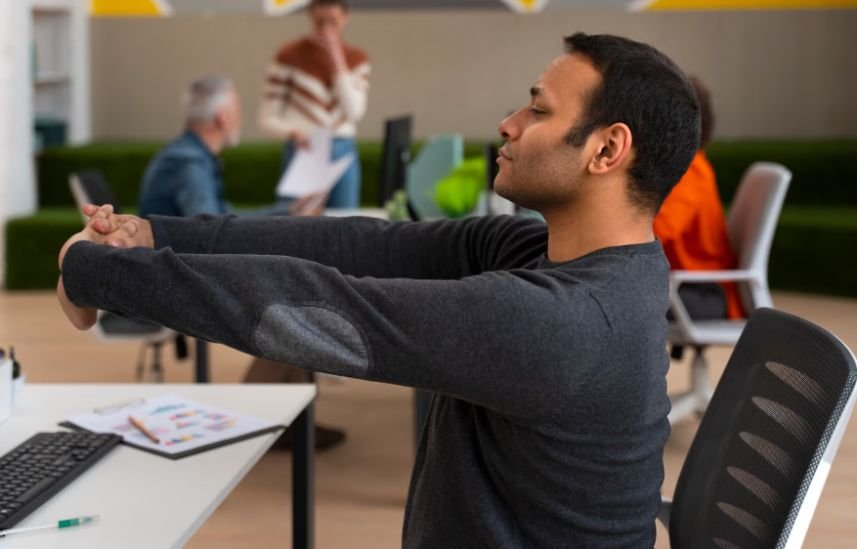
Fascia is the connective tissue web that wraps every muscle, organ, and joint in your body. Massage generally works the muscle belly. Structural bodywork works the fascia, the tissue between and around the muscle, on the theory that restrictions there are what’s actually locking your posture and movement into a bad pattern.
Structural integration focuses on connective tissue, which connects everything together, and helps correct and rebalance shortened, thickened, and dehydrated tissue that restricts joint mobility, muscle function, and proper posture alignment.
That’s why a structural practitioner might spend time on your hip when you come in for shoulder pain. Shoulder pain may not originate in the shoulder itself, and the underlying cause could be related to restrictions in the ribcage, pelvis, neck, or feet, so the whole body gets looked at to identify compensatory patterns.
This broader assessment reflects the same principle behind holistic health approaches: one area of discomfort cannot always be understood in isolation. Movement habits, posture, stress, recovery, and compensation patterns may interact, so lasting improvement often requires looking beyond the precise spot where symptoms appear.
One Session vs. a Series
A relaxation massage is a complete experience on its own. You book it, you feel better, you book another one whenever you feel like it.
Structural work is usually not one-and-done, it is commonly delivered in a series, such as the ten-session Rolfing model, that rebalances the entire structure of the body over multiple visits rather than treating each session as independent. Each session builds on the last. Skipping around defeats the point.
What the Research Actually Shows About Fascia and Pain

This isn’t just practitioner philosophy. Fascia research has picked up considerably in the last two years, and the findings back up why this tissue gets treated as its own target.
A 2025 narrative review in Frontiers in Pain Research found that fascia is richly innervated by nociceptors and sympathetic fibers and undergoes pathological changes in patients with myofascial pain syndrome, with imaging and histological studies confirming fibrosis, densification, and inflammatory activity in symptomatic fascial tissue.
On the clinical side, a 2024 study in Acta Psychologica on adults with chronic neck pain and depression found that myofascial release produced a substantial reduction in pain perception and stiffness, along with increased cervical spine range of motion and improved heart rate variability, with effect sizes ranging from small to large.
A separate systematic review on chronic low back pain concluded that fascial tissues were implicated in the condition’s development, and treatment led to decreased symptoms and improved functional outcomes of greater magnitude compared to manual therapy alone.
None of this means structural work is a cure-all. Research published in Frontiers in Physiology in 2026 notes that evidence on some specific methods, including Rolfing itself, remains limited and mixed, and this is an active area of study rather than settled science. But the direction of the evidence is consistent: fascia is not inert wrapping paper, and working on it directly produces measurable effects that muscle-focused massage doesn’t always reach.
How to Tell Which One You Actually Need
| You want… | Go with… |
| Stress relief, relaxation, a reset after a hard week | Relaxation or Swedish massage |
| Short-term relief from a tight neck or back after a workout | Deep tissue massage |
| A recurring posture problem that keeps coming back | Structural bodywork |
| Pain that moves or shows up somewhere unrelated to where it started | Structural bodywork |
| A single relaxing hour with no ongoing commitment | Relaxation or Swedish massage |
| Chronic tension that regular massage keeps almost fixing | Structural bodywork |
The dividing line, according to practitioners who do both: choose massage for immediate relaxation and structural integration for longer-lasting change to posture and movement patterns.
What a Structural Session Actually Feels Like
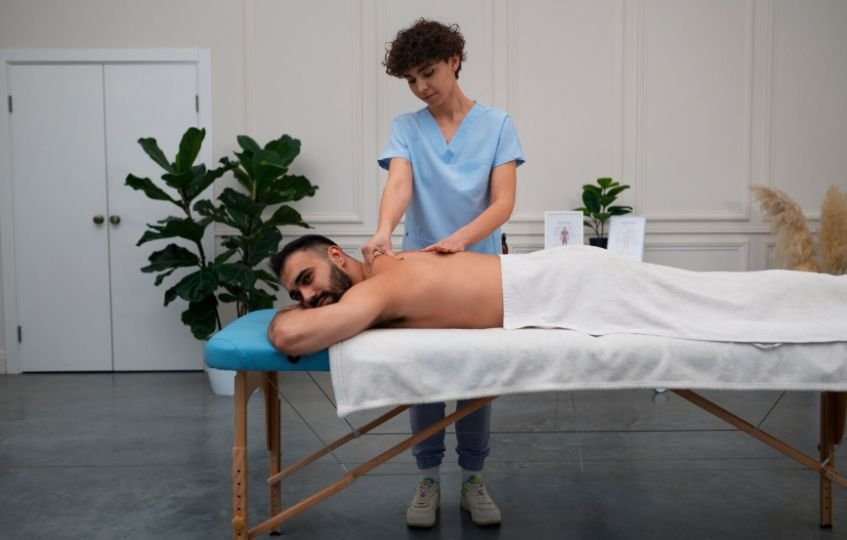
It’s slower than most people expect. Structural work isn’t about grinding into a knot until it releases. It’s deliberate, often uncomfortable in a different way than deep tissue work, and frequently interactive.
Sessions are often interactive and educational, helping clients better understand how their body moves and compensates, rather than being a passive experience where you just lie there. You might be asked to stand, walk, or move through a range of motion mid-session so the practitioner can see how a fascial restriction is actually affecting your gait or posture in real time, not just how it feels under their hands.
That’s the “clinical” part of clinical massage and structural bodywork. It’s assessment-driven, not just pressure-driven. For anyone dealing with a posture issue that’s outlasted every regular massage they’ve tried, Clinical Massage Therapy services and Structural Bodywork in SLC, Utah approaches the body this way, treating the session as an assessment of the whole system rather than a spot treatment for whatever hurts today.
The Honest Caveat Nobody Puts in the Brochure
Structural bodywork is not a replacement for medical care. If you have a diagnosed injury, nerve involvement, or a condition your doctor is actively managing, this kind of work is a complement to that care, not a substitute for it, and any practitioner worth seeing will tell you the same thing upfront.
Hands-on therapy is also most effective when it supports the habits you practice between appointments. Regular movement, sufficient sleep, hydration, stress management, and simple recovery routines all contribute to incorporating wellness into daily life rather than relying on a single treatment to solve every problem.
It’s also not magic. Fascia responds slowly, changes happen over a series, not a single 60-minute session, and the research, while promising, is still developing. Anyone promising a permanent fix from one appointment is overselling it.
What the evidence and practitioner consensus do support is this: if regular massage keeps giving you the same 48 hours of relief before the same pain comes back, the muscle isn’t where the problem lives. It’s worth trying a modality that actually looks at the fascia instead.
Have you tried structural bodywork, or are you strictly a Swedish-massage person? Curious what convinced people to make the switch.