

A slick website tells you almost nothing about how your kid’s Tuesday afternoon session will actually go.
Every in-home ABA provider looks about the same from the outside. Warm photos. The word “individualized” a few times. A phone number. But the person who shows up in your living room, how they handle a rough moment, whether anyone senior is actually watching the plan? None of that is on the homepage.
And here’s the part that stings: you can’t get the time back. Pick the wrong fit and you usually find out three or four months in, and those are months your child doesn’t get to redo. So the vetting call matters more than almost anything else in this whole process.
Skip the soft questions like “do you care about my child,” because everyone says yes. The ones below are the ones that make a weak provider stumble.
Start With Whoever Will Be in Your Living Room
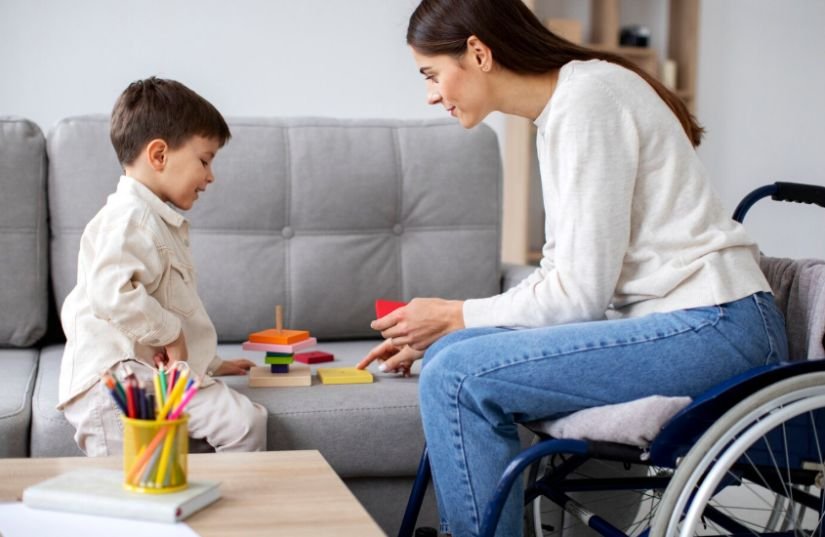
In-home ABA runs on a small team, and you should know exactly who’s who before you sign anything.
Day to day, the person on the floor with your child is usually a Registered Behavior Technician (RBT). That’s a paraprofessional who’s trained to run sessions but works under close, ongoing supervision. Above them sits a Board Certified Behavior Analyst (BCBA), a graduate-level clinician who builds the treatment plan, sets the goals, and is qualified to practice independently.
Some teams also carry a BCaBA, an assistant-level analyst who works under the BCBA. Those definitions come straight from the Behavior Analyst Certification Board, and they matter, because “our therapists” can mean wildly different things depending on who’s actually in the room.
So ask it plainly: who will be in my home each week, and what’s their certification? Then check for yourself. The BACB keeps a public registry, updated daily, where you can look up any BCBA’s status and disciplinary history in about two minutes. If a provider gets cagey when you ask for names and credentials, you already have your answer.
| Role | Level | What they do in your home | Supervision |
|---|---|---|---|
| RBT (Registered Behavior Technician) | Paraprofessional | Runs the day-to-day sessions | Works under close, ongoing supervision |
| BCaBA (Board Certified Assistant Behavior Analyst) | Undergraduate-level | Helps deliver and support the plan | Works under a BCBA |
| BCBA (Board Certified Behavior Analyst) | Graduate-level | Designs the plan, sets goals, runs the team | Practices independently |
Source: Behavior Analyst Certification Board.
In-home care also raises a few questions a center-based family never thinks about:
- Who runs background checks on the people coming to my house, and can I see the policy?
- If my RBT is out sick, do I get a trained sub, or do we just lose the session?
- How do you keep things consistent when staff changes?
Turnover is real in this field. Pretending otherwise is a bad sign. What you want is a provider with an actual plan for when someone leaves.
How Often Does the BCBA Actually Watch?
A treatment plan is only as good as the person watching it, and in home-based care the BCBA isn’t in your living room every session. So how involved are they, really?
There’s a widely used benchmark. The Council of Autism Service Providers, whose ABA Practice Guidelines get treated as the field’s standard, points to roughly one to two hours of case supervision for every ten hours of direct therapy. You can read the CASP guidelines if you want the full picture. It isn’t a hard legal rule, and the right number really does depend on your child. Still, it gives you a yardstick. If a provider tells you the BCBA checks in once a month, that’s a flag.
Caseload is the other half of it. Commonly cited guidance from the BACB and CASP puts a BCBA running focused treatment somewhere around 10 to 15 kids, and comprehensive treatment closer to 6 to 12. A BCBA juggling 40 families is not going to know yours.
So ask:
- How many hours a month will the BCBA spend on my child’s case, and how much of that is watching sessions live?
- How many families is that BCBA responsible for right now?
- Will I actually meet them, or only the RBT?
“We supervise closely” is a nice sentence. Ask for the actual hours.
Chart suggestion for the publisher: a simple bar graphic showing the CASP benchmark of roughly 1 to 2 hours of BCBA supervision per 10 hours of direct therapy would give readers a quick visual anchor here.
The Philosophy Question Most Parents Skip
This is the question that separates providers, and it’s the one families forget to ask.
ABA has changed a lot over the years, and not every provider changed with it. Older, compliance-first programs pushed kids to sit still, make eye contact, and stop stimming, whether or not the child was okay with it. Plenty of autistic adults have said, loudly, that this approach caused harm. The field’s answer has been a real shift toward assent-based, neurodiversity-affirming care.
A child’s comfort and participation can also be influenced by broader physical and emotional factors. Understanding the role of gut health in mental well-being may help parents consider how digestion, sleep, stress, mood, and daily routines can affect how a child feels and responds during therapy.
Here’s the distinction that matters. Consent is the legal permission you give as the parent. Assent is your child’s own moment-to-moment willingness to take part, read from their words and their body language. A peer-reviewed paper in Behavior Analysis in Practice walks through how modern ABA is trying to build assent into every session instead of treating a child’s “no” as a behavior to override. Under the BACB’s ethics code, providers are expected to seek assent when it applies.
Turned into a vetting call, that sounds like:
- What do you do when my child says no, or walks away from a task?
- How do you know when a kid has had enough for the day?
- Do you build sessions around my child’s interests, or around a fixed curriculum?
Listen closely to how they answer. Here’s a rough guide:
| You want to hear | Walk away if you hear |
|---|---|
| “We watch for signs your child is done, and we back off.” | “We work through it until the task is finished.” |
| “Goals are built around what your child actually cares about.” | “We run the same program for every kid.” |
| “Skills and comfort come first, not blind compliance.” | “The first thing we teach is following instructions.” |
| “We mostly use your child’s own interests as motivation.” | “We rely on snacks and treats to get cooperation.” |
Prove It: How You’ll See Progress
ABA is supposed to be data-driven, so a good provider is tracking something every session and can show it to you.
Learning what role does omega-3 play in brain function may help parents understand why broader wellness habits can support concentration, memory, mood, and day-to-day participation alongside professional care.
Ask how they measure progress, how often the plan gets updated based on that data, and how they’ll report it back to you. Then ask to see a sample progress report with the names blacked out. A provider who’s proud of their reporting hands one right over. A provider who fumbles is telling you their data lives in a drawer somewhere.
The in-home upside is that you’re right there. You can watch. So ask what you should be looking for between the formal updates too, because a provider who wants you paying attention is usually a provider who’s confident in the work.
The Boring Logistics That Make or Break It

None of the clinical quality matters if the logistics don’t fit your family.
Run through the unglamorous but load-bearing questions. How many hours a week are they recommending, and why that number? What does a typical week actually look like? What’s covered by your insurance or state program, and what lands on you? Is there a waitlist, and how long? How much are you, the parent, expected to train and take part, because in-home ABA leans on caregivers more than center-based care does.
One thing to settle up front: the evaluation. Before therapy can start, your child needs a diagnosis, and depending on where you live and who’s paying, a formal assessment that establishes medical necessity. That’s often a full, multi-disciplinary evaluation, and it’s the gate that unlocks funded services. Some teams, like the ones handling CMDE autism Minnesota cases, run that evaluation and the in-home therapy under one roof, which can save you weeks of waiting. Ask your provider whether they do the evaluation themselves or refer it out.
Then the in-home specifics people forget until day one. Where will sessions happen? What do you need to set up? How do siblings fit into the picture? Good providers have done this a hundred times and can walk you through all of it.
Red Flags That Should End the Conversation
A few answers should stop you cold.
- You can’t verify the BCBA’s certification, or the practice won’t hand over a name.
- The only contact you ever get is “the office” or an “Admin,” never a clinician.
- They can’t tell you how often the BCBA supervises, or the honest answer is once a month.
- The pitch leans on compliance, obedience, or “we’ll fix the behaviors.”
- Food is the main way they get your kid to cooperate.
- They won’t share a sample progress report or a single parent reference.
- They push you to sign this week because a “spot” is about to close.
Any one of these is a reason to slow down. Two or more, and you keep looking. Good providers exist, and they don’t need to rush you.
Before Your Next Call
You’re not being a difficult parent by asking all of this. You’re doing the exact job a good provider wants you to do.
The ones worth hiring will welcome every question, because the answers are how they earn your trust. The ones who get defensive, dodge the credential check, or lean on pressure are showing you who they are before you’re locked in. Believe them.
So before your next call, write down the five questions that matter most to your family. Which one are you most nervous to ask?